What Happens During a PTSD Evaluation? A Step-by-Step Guide for Teens & Adults
What Happens During a PTSD Evaluation?
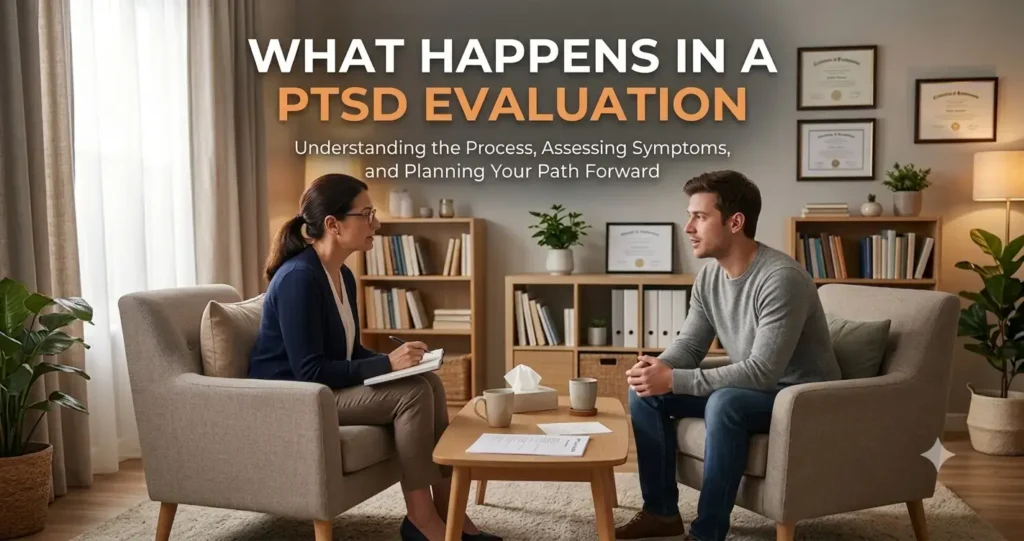
If you’re considering professional help for trauma-related symptoms, it’s natural to wonder what happens during a PTSD evaluation. A PTSD evaluation is a confidential mental health assessment that helps a psychiatric provider understand your symptoms, determine whether they meet the diagnostic criteria for post-traumatic stress disorder (PTSD), and recommend appropriate treatment.
The evaluation is not a test you can pass or fail. Instead, it’s a structured conversation focused on understanding how trauma has affected your emotional health, daily functioning, and overall quality of life.
Why Is a PTSD Evaluation Important?
Not everyone who experiences a traumatic event develops PTSD. While some people recover naturally, others continue to experience symptoms that interfere with work, relationships, sleep, and everyday responsibilities.
A PTSD evaluation helps your provider:
- Identify symptoms consistent with PTSD
- Determine the severity and duration of symptoms
- Assess how symptoms affect daily functioning
- Identify other mental health conditions that may occur alongside PTSD
- Recommend treatment options based on your individual needs
An accurate evaluation allows treatment to focus on the issues most affecting your well-being.
What Happens During a PTSD Evaluation?
Although every evaluation is personalized, most appointments include several key areas of discussion.
1. A Conversation About Your Symptoms
Your provider will ask about the symptoms you’ve been experiencing, including:
The goal is to understand which symptoms are present, how often they occur, and how much they affect your daily life.
2. Discussion of Your Trauma History
You may be asked about experiences that could be connected to your symptoms.
This discussion is handled respectfully and at your own pace. You are not expected to describe every detail of the traumatic event. Your provider asks only the information necessary to understand your symptoms and make an accurate clinical assessment.
3. Medical and Mental Health History
Your provider will review factors that may influence your diagnosis or treatment, such as:
This information helps create a complete picture of your overall health.
4. How PTSD Affects Your Daily Life
One of the most important parts of the evaluation is understanding how symptoms impact everyday functioning.
Understanding these challenges helps determine the most appropriate treatment recommendations.
How Long Does a PTSD Screening Take?
Most PTSD evaluations take 45 to 60 minutes, although the exact length depends on your symptoms, medical history, and the complexity of your concerns.
The appointment gives you enough time to discuss your experiences without feeling rushed.
Will I Receive a PTSD Diagnosis During the Appointment?
In many cases, yes.
After reviewing your symptoms and history, your provider determines whether your symptoms meet the diagnostic criteria for PTSD or another mental health condition.
If additional information is needed, your provider may recommend a follow-up appointment before making a final diagnosis.
What Happens After a PTSD Evaluation?
Once the evaluation is complete, your provider will discuss treatment recommendations based on your individual needs.
Depending on your symptoms, your treatment plan may include:
- Medication management when clinically appropriate
- Referral for trauma-focused psychotherapy
- Cognitive Behavioral Therapy (CBT)
- Eye Movement Desensitization and Reprocessing (EMDR)
- Lifestyle strategies that support recovery
- Regular follow-up appointments to monitor progress
Treatment plans are reviewed regularly and adjusted as your symptoms change.
Can a PTSD Evaluation Be Done Through Telehealth?
Yes. Many adults complete their PTSD evaluation through secure telehealth appointments.
A virtual PTSD evaluation allows you to meet with a psychiatric provider from the privacy of your home while receiving the same thorough assessment used during an in-person visit.
For many people, participating from a familiar environment makes it easier to discuss sensitive experiences.
Frequently Asked Questions
When Should You Schedule a PTSD Evaluation?
Consider seeking an evaluation if trauma-related symptoms continue for more than a month or begin interfering with your work, relationships, sleep, or daily responsibilities.
Early evaluation can help identify the cause of your symptoms and allow treatment to begin before those symptoms become more disruptive.
Take the First Step Toward Understanding Your Symptoms
A PTSD evaluation provides clarity about what you’re experiencing and helps determine the most appropriate next steps for treatment. Whether your symptoms are recent or have been affecting you for years, a professional assessment can help you better understand your mental health and explore evidence-based treatment options.
Ready to take the next step? ICT Psychiatry provides confidential telehealth PTSD evaluations and treatment for teens & adults throughout Kansas. Schedule your PTSD evaluation today and get personalized care from an experienced psychiatric provider.