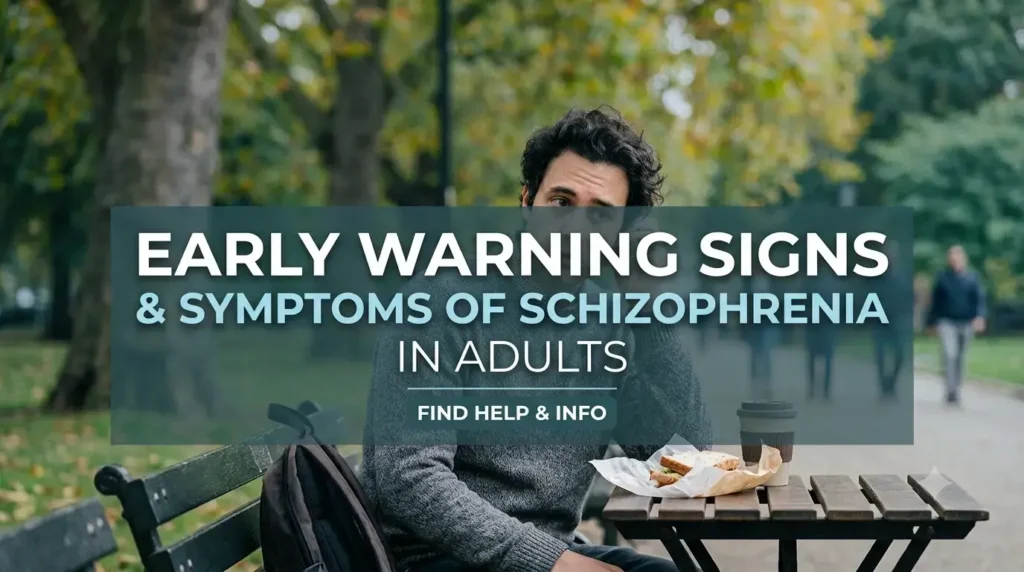
Early Warning Signs & Symptoms of Schizophrenia in Adults
What to watch for, why it’s easy to miss, and what to do next explained gently and clearly.
If you’re reading this, chances are something has felt “off.” Maybe about yourself, maybe about someone you love.
A friend who’s pulled away. A sibling who seems distracted, distant, or says things that don’t quite add up. Or maybe it’s you, wondering if what you’re feeling is just stress, or something more.
First: you’re not overreacting by looking this up. Noticing changes and wanting to understand them is one of the most caring things you can do. Early signs of schizophrenia are often quiet and easy to miss they can look like burnout, moodiness, or “just a rough patch.” That’s exactly why learning what to watch for matters so much.
Let’s walk through it together, gently and clearly.
What is schizophrenia, really?
Schizophrenia is a mental health condition that affects how a person thinks, feels, and perceives reality. It’s not the same as having “multiple personalities” that’s a common myth. It’s more about the brain’s filtering system getting tangled, which can affect thoughts, emotions, and the senses.
It typically emerges in the late teens to early thirties, and rarely appears overnight. There’s usually a period months, sometimes a couple of years where subtle changes show up first. This is often called the prodromal phase, and it’s the window where early awareness can make the biggest difference.
Early warning signs to watch for
None of these signs alone confirms schizophrenia. What matters is the pattern several signs together, lasting for weeks or longer, genuinely changing how someone functions.
Social
Withdrawal from others
Skipping plans they used to enjoy, going quiet in group chats, avoiding family gatherings. It can look like introversion at first, but often feels different to those close to the person less like needing space, more like slowly disappearing.
Cognitive
Trouble thinking or concentrating
Losing a train of thought mid-sentence, struggling to keep up at work or school in a way that wasn’t there before. Simple tasks replying to an email, following a recipe can suddenly feel overwhelming.
Beliefs
Unusual beliefs or suspicion
This develops gradually becoming more guarded, feeling watched or targeted, holding onto ideas disconnected from what’s actually happening. It’s not ordinary caution; it’s often paired with real distress.
Sensory
Changes in perception
Hearing sounds or voices others don’t, or feeling unusually sensitive to light, noise, or touch. These experiences are often more confusing and frightening for the person going through them than for anyone watching.
Routine
Disrupted sleep and habits
Insomnia, a flipped sleep schedule, or letting go of hygiene, meals, or chores especially alongside other signs, rather than on its own.
Speech
Disorganized speech
Jumping between unrelated topics, trailing off before finishing a thought, using words in ways that don’t quite connect. Subtle at first conversations just feel “harder to follow.”
Common Symptoms of Schizophrenia in Adults
Once schizophrenia moves beyond the early, subtle stage, symptoms tend to fall into three broad categories. Doctors often group them this way because it helps make sense of what’s happening and it’s genuinely useful for you too.
Positive symptoms
- Hallucinations — hearing, seeing, or feeling things that aren’t there
- Delusions strongly held beliefs that don’t match reality, like feeling persecuted or having a special, unrealistic sense of importance
- Disorganized thinking or speech jumping between unrelated ideas, or speech that’s hard to follow
Negative symptoms
- Reduced motivation or difficulty starting and finishing tasks
- Blunted emotional expression a flatter voice or face
- Withdrawing from friends, family, and social activities
- Speaking less than usual, or giving brief, empty replies
Cognitive symptoms
- Trouble concentrating or holding attention
- Difficulty with working memory following instructions, tracking a conversation
- Slower processing speed when making decisions
Not everyone experiences all three categories, and severity varies a lot from person to person. Knowing these categories exists mainly to help you describe what you’re noticing more clearly to a doctor it’s a vocabulary, not a checklist to self-diagnose with.
Why these signs are often missed
Here’s the honest truth: these signs overlap a lot with normal stress, depression, anxiety, or even someone’s natural personality. A quieter person isn’t necessarily withdrawing. A tired person isn’t necessarily experiencing psychosis. This overlap is exactly why families often feel confused, guilty, or like they “should have known sooner.”
If that’s you right now please be gentle with yourself. These signs are genuinely subtle, and even professionals rely on patterns over time, not single moments, to understand what’s going on.
When to seek professional help
Reach out to a doctor or therapist if you notice:
- Several of the signs above happening together, not just one
- Changes lasting more than a few weeks
- A noticeable decline in functioning at work, school, or home
- Expressions of fear, confusion, or distress about their own thoughts
- Any comments about self-harm or safety this always warrants immediate attention
You don’t need to wait for a crisis to ask for help. A conversation with a primary care doctor or therapist early on can open the door to support, without needing to have all the answers first.
How schizophrenia is diagnosed
There’s no single test no blood test or scan that confirms it. Diagnosis usually involves a psychiatric evaluation, a conversation about symptoms and how long they’ve lasted, and ruling out other causes like substance use, medical conditions, or other mental health disorders. It’s a process, not a single appointment, and that’s completely normal.
Supporting a loved one or yourself
If you’re supporting someone
Patience and calm presence go a long way. You don’t need the perfect words staying connected and gently encouraging professional support matters more than saying the “right” thing.
If it’s you
Early treatment tends to lead to much better outcomes. Therapy, medication, and community support have helped countless people manage symptoms and keep living full, meaningful lives.
A gentle final word
Noticing these signs in yourself or someone you love isn’t overreacting. It’s care in action. You don’t need certainty to reach out for support. A conversation with a doctor or therapist can bring clarity, relief, and a path forward, often sooner than you’d expect.