Can Depression Affect Memory and Focus?
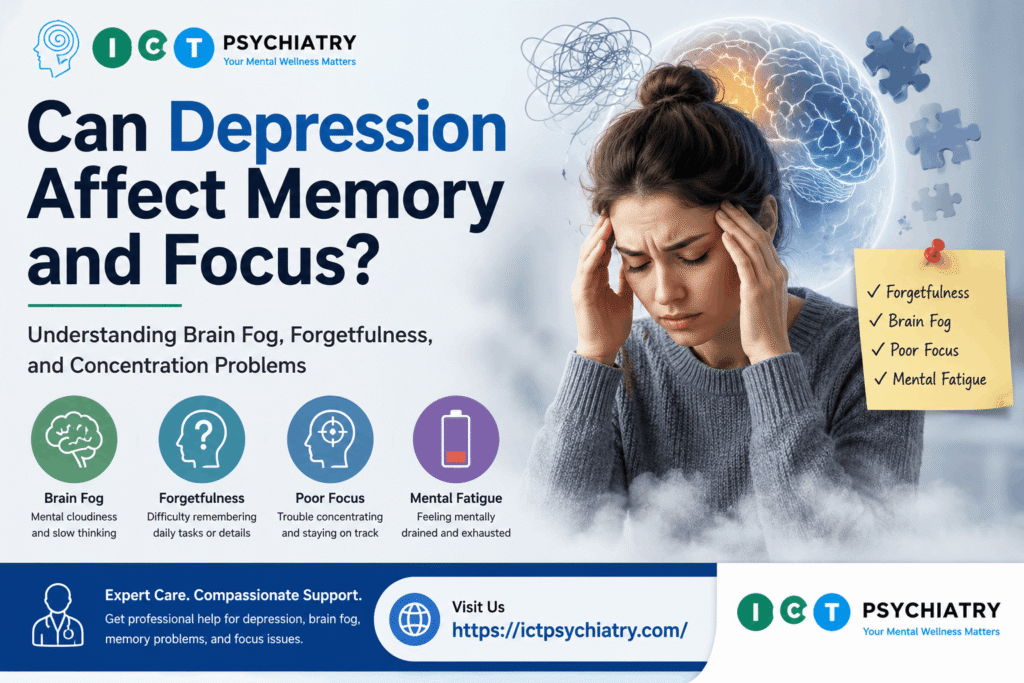
Yes, depression can affect memory and focus. Many people with depression experience Mental tiredness, forgetfulness, difficulty concentrating, and slow thinking. These symptoms are commonly known as depression and brain fog. It can make everyday tasks feel mentally exhausting and may affect work, studies, relationships, and daily routines.
Why Depression Can Make Thinking Feel Difficult?
Depression is often associated with sadness and low mood, but it can also affect how the brain processes information. Many people notice changes in their concentration, thinking speed, decision making, and ability to remember things during depression.
Some individuals struggle to stay focused during conversations or meetings. Others find themselves rereading the same sentence multiple times because their mind cannot stay engaged. Many people also describe feeling mentally exhausted even after getting enough rest.
These cognitive symptoms are real and are commonly linked with depression, emotional stress, poor sleep, and mental fatigue.
Quick Signs Depression May Be Affecting Your Brain
Depression can affect people differently, but some common cognitive symptoms include:
- Forgetting small daily tasks
- Losing focus during conversations
- Feeling mentally slow or distracted
- Difficulty making decisions
- Brain fog and confusion
- Trouble remembering recent information
- Low attention span
- Feeling emotionally and mentally exhausted
These symptoms may gradually interfere with productivity, confidence, and These symptoms may gradually interfere with productivity, confidence, and daily functioning.
How Depression Affects the Brain?
Research suggests that depression may influence brain chemicals connected with mood, focus, motivation, and memory. These include dopamine, serotonin, and stress related hormones.
Long term emotional stress may also affect areas of the brain associated with learning and memory. When the brain feels emotionally overloaded, concentrating on even simple tasks can become difficult.
This is why many people with depression often say things like: I cannot think clearly anymore, My brain feels tired all the time, I keep forgetting simple things, I cannot focus like I used to. Depression does not only affect emotions. It can also affect mental clarity and cognitive performance.
Common Memory and Focus Problems in Depression
Depression can affect the way people think, remember information, and stay mentally focused throughout the day. Many individuals notice that tasks that once felt simple may suddenly start feeling mentally exhausting or difficult to manage.
One of the most common symptoms is difficulty concentrating. People may find it hard to stay focused while reading, working, studying, attending meetings, or even following conversations. Some individuals notice they reread the same sentence multiple times because their mind keeps drifting away.
Forgetfulness is also very common during depression. A person may forget appointments, misplace everyday items, lose track of conversations, or struggle to remember small daily tasks. This can sometimes create frustration, stress, or self doubt.
Many people also experience mental fatigue, where the brain feels constantly tired or emotionally drained. Even simple activities may start feeling mentally heavy. Some individuals describe this feeling as having “no mental energy” or feeling emotionally exhausted all the time.
Depression may also slow down thinking patterns. People sometimes feel like their thoughts are moving more slowly than usual, making decision making, problem solving, or organizing ideas more difficult.
Multitasking can also become challenging. Managing several responsibilities at once may feel overwhelming, especially during periods of emotional stress or burnout.
Over time, these symptoms may affect productivity, motivation, confidence, relationships, work performance, and daily functioning. Many people do not immediately realize that depression can affect cognitive function in addition to emotional health.
What Is Depression Brain Fog?
Depression brain fog is a term commonly used to describe mental cloudiness during depression. It may feel like your brain is constantly tired or struggling to process information clearly.
People experiencing brain fog often report:
Feeling mentally slow, Difficulty focusing, forgetfulness, Emotional exhaustion, Trouble organising thoughts.
Brain fog is not laziness or lack of intelligence. It is a cognitive symptom linked with depression, stress, poor sleep, emotional overload, and mental fatigue.For some people, brain fog becomes worse during stressful situations or emotionally difficult periods.
Why Depression Causes Forgetfulness?
There are several reasons why depression may affect memory and concentration.
Emotional overload. Constant negative thoughts and emotional stress can overwhelm the brain and reduce its ability to focus properly.
Poor Sleep. Many people with depression experience sleep disturbances, insomnia, or poor sleep quality. Sleep plays a major role in memory formation and concentration.
Mental Fatigue. Depression can drain emotional and mental energy, making thinking feel slow or heavy.
Attention Problems. Sometimes the problem is not memory itself but difficulty paying attention. When attention is weak, information may not be stored properly.
Stress Hormones. Long-term stress may affect brain function and cognitive clarity, making concentration more difficult.
Can Depression Feel Like ADHD?
Yes, depression can sometimes feel similar to ADHD because both conditions may affect focus, attention, productivity, and concentration.
People may experience: Distraction, Forgetfulness, Low concentration, Difficulty completing tasks, Mental restlessness.
However, depression related focus problems are often connected with sadness, emotional exhaustion, low motivation, mental fatigue.
ADHD symptoms usually begin earlier in life and involve long-term attention difficulties. In some cases, both conditions may exist together.
How Sleep Impacts Mental Clarity?
Sleep plays an important role in brain function and emotional health. Poor sleep can make concentration problems and brain fog worse – Disturbed sleep, Difficulty falling asleep, Mental restlessness, and Low mental energy.
Lack of quality sleep may lead to slow thinking, irritability, forgetfulness, and reduced focus throughout the day. Improving sleep habits may help improve memory and mental clarity over time.
Emotional Exhaustion and Mental Fatigue Symptoms
Emotional exhaustion can make the brain feel constantly tired and overwhelmed.
Common symptoms include:
– Diffculty focusing
– Feeling mentally drained
– Low motivation
– Emotional numbness
– Reduced productivity
– Lack of mental energy
Mental fatigue is a very common symptom during depression and burnout.
When Memory Problems May Need Professional Help?
Occasional forgetfulness can happen to anyone. However, it may be important to seek professional support if memory or concentration problems begin affecting daily life.
You should consider speaking with a healthcare professional if:
Memory issues become severe, Concentration problems affect work or studies, confusion increases over time, Symptoms continue for long periods, and daily tasks become difficult to manage
A mental health professional may also help rule out other possible causes such as:
Vitamin deficiencies, Thyroid conditions, Sleep disorders, Medication side effects, and Neurological conditions.
How to Improve Focus and Memory During Depression
Many people notice improvements in focus and memory when depression is properly managed.
Improve Sleep Quality – Healthy sleep supports brain function, emotional balance, and concentration.
Reduce Emotional Stress – Taking breaks and reducing emotional overload may help improve mental clarity.
Stay Physically Active – Regular movement and exercise may support mood, focus, and brain health.
Follow a Structured Routine – Simple daily routines may reduce mental exhaustion and improve productivity.
Limit Screen Overload – Excessive screen time and constant scrolling may increase distraction and mental fatigue.
Practice Mindfulness – Relaxation techniques and mindfulness practices may help calm racing thoughts.
Seek Professional Support – Therapy and psychiatric guidance may help manage depression related cognitive symptoms more effectively.
Treatment Options for Depression Related Brain Fog
Treatment depends on the individual and the severity of symptoms.
| Therapy | Therapy may help individuals manage emotional stress, negative thought patterns, and cognitive symptoms linked with depression. |
| Lifestyle Changes | Healthy sleep, nutrition, physical activity, and stress management may improve mental clarity and focus. |
| Medication | Some individuals may benefit from antidepressant medication prescribed by a qualified healthcare professional. |
| Stress Management | Reducing emotional stress may support concentration, focus, and cognitive recovery. |
| Psychiatric Evaluation | A professional evaluation may help identify depression, anxiety, ADHD, burnout, or other related mental health concerns. |
Frequently Asked Questions
Key Takeaway
Depression can affect much more than emotions. It may also impact memory, concentration, focus, and mental clarity. Many people experience brain fog, forgetfulness, slow thinking, and mental fatigue during depression.
These cognitive symptoms are real and are commonly linked with emotional stress, poor sleep, mental exhaustion, and changes in brain function.
If memory or concentration problems begin affecting daily life, work, studies, or relationships, seeking professional support may help identify the cause and improve overall mental well-being.
Need Professional Support?
If you or someone you know is struggling with depression, brain fog, memory problems, or difficulty focusing, professional guidance may help.
ICT Psychiatry provides mental health support for individuals experiencing depression, emotional exhaustion, anxiety related cognitive symptoms, and concentration difficulties.
Taking the first step toward support may help improve mental clarity, emotional well being, and daily functioning.