Therapy vs Psychiatrist: What’s the Real Difference and Which Do You Need in Wichita?
Many people in Wichita feel confused when they try to understand the difference between therapy and psychiatry. Some people feel stressed, anxious, emotionally tired, or overwhelmed but do not know where to go for help. Caregivers also struggle when they are trying to support a parent, spouse, or family member dealing with depression or anxiety.
As a mental health writer with 3 years of experience creating caregiver-focused content, I have seen how common this confusion is. Many people delay treatment because they are unsure if they need a therapist or a psychiatrist.
According to mental health research in the United States, millions of adults experience anxiety, depression, stress, or emotional struggles every year. The good news is that support is available, and understanding your options is easier than most people think.
This guide explains the therapy vs psychiatrist difference in a simple and clear way so Wichita adults and caregivers can feel more confident when choosing mental health support.
What Is Therapy?
Therapy is a form of mental health support that helps people understand their emotions, thoughts, behaviours, and stress. A therapist talks with clients and helps them learn healthier ways to manage emotional struggles.
Therapy is often helpful for people dealing with anxiety, depression, grief, stress, burnout, trauma, or relationship problems. Many people choose therapy because they want emotional support and coping tools without using medication first.
There are different types of therapy. Cognitive Behavioural Therapy helps people change unhealthy thinking patterns. Talk therapy allows people to openly discuss emotions and daily struggles. Family therapy improves communication between loved ones, and grief counselling helps people process loss and emotional pain.
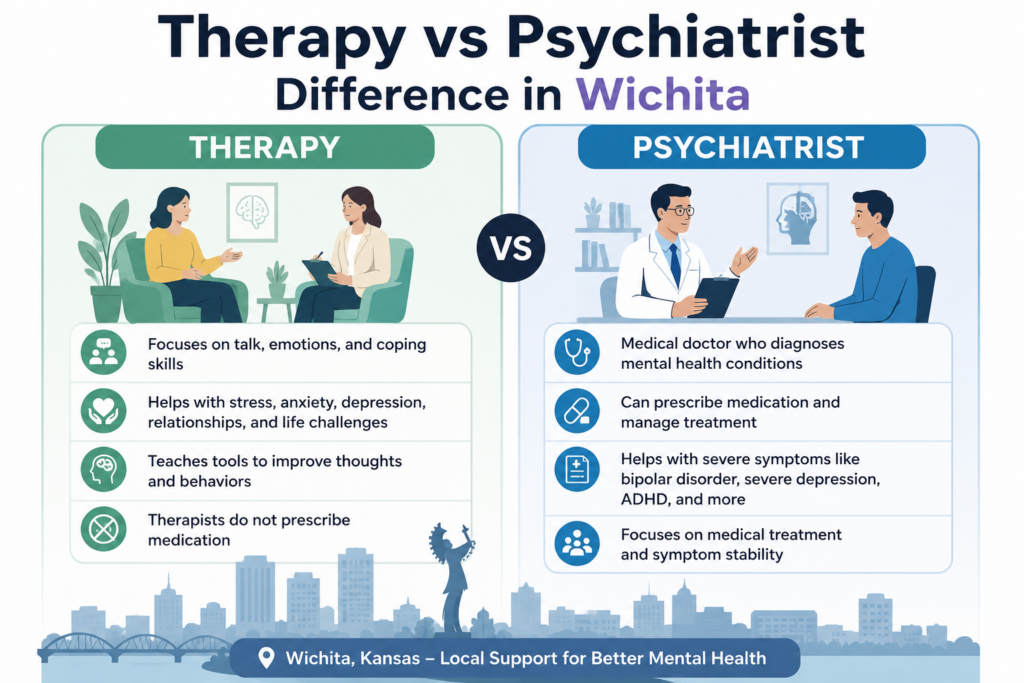
Therapists usually do not prescribe medication. Their main focus is emotional healing, support, and behaviour improvement.
Many people searching for a “therapist near me, Kansas” are looking for someone who listens, understands, and helps them feel emotionally stronger.
Who is a Psychiatrist?
A psychiatrist is a medical doctor who treats mental health conditions. Unlike therapists, psychiatrists can prescribe medication and create medical treatment plans.
A psychiatrist helps people dealing with severe anxiety, depression, ADHD, bipolar disorder, panic attacks, or other mental health conditions that affect daily life.
Psychiatrists evaluate symptoms, emotional changes, sleep, energy levels, and behaviour patterns. They may recommend medication if symptoms become difficult to manage without medical support.
Psychiatry visits are usually shorter than therapy sessions because they focus more on diagnosis and treatment planning.
Some psychiatrists also provide talk therapy, but many mainly focus on medication management.
Difference Between Therapy & Psychiatrist.
The biggest difference between therapy and psychiatry is the treatment approach.
Therapists focus on emotional support, coping skills, and behaviour changes. Psychiatrists focus on diagnosis, medication, and medical treatment.
Therapy sessions usually involve deeper conversations about emotions, stress, trauma, relationships, and personal struggles. Psychiatry appointments often focus on symptoms, medications, sleep patterns, mood changes, and treatment progress.
Another difference is education. Therapists study counselling, psychology, or social work. Psychiatrists complete medical school and psychiatric training.
Many people in benefit from using both services together. A therapist may help someone manage emotional stress, while a psychiatrist helps stabilise severe symptoms with medication.
Which One Should You Choose?
The right option depends on your symptoms and daily struggles.
Therapy may be a good first step if you feel emotionally overwhelmed, stressed, anxious, burned out, or emotionally exhausted. Therapy is also helpful for caregivers who feel mentally drained while supporting loved ones.
Psychiatry may help if symptoms feel severe or affect daily functioning. If depression affects sleep, appetite, work, or relationships, a psychiatrist may recommend medication support.
Some people start with therapy first and later add psychiatric care if symptoms continue. Others use both together from the beginning.
There is no single right answer for everyone. The goal is to find support that helps you feel emotionally stable and healthier over time.
Need help deciding where to start?
Caregiver Support in Wichita.
Caregivers often carry emotional stress quietly. Supporting a parent, spouse, or family member with anxiety or depression can become emotionally exhausting over time.
Many caregivers ignore their own mental health while focusing completely on others. I understand how heavy that responsibility can feel.
If a loved one becomes withdrawn, sad, anxious, or emotionally disconnected, professional support may help. Gentle conversations and emotional encouragement can make a big difference.
Therapy can also support caregivers themselves by helping them manage stress, burnout, and emotional fatigue.
If you need guidance for yourself or a loved one, schedule a caregiver consultation here.
Wichita Mental Health Resources.
Wichita residents have access to several mental health support options.
COMCARE of Sedgwick County offers community mental health services, counselling, crisis support, and psychiatric care.
Ascension Via Christi Behavioural Health Centre provides behavioural health treatment, therapy, and psychiatric services.
Before scheduling appointments, check your insurance coverage and ask providers about telehealth options.
Looking for support in Wichita is Kansas.
Closing Thoughts
Mental health support should not feel confusing or overwhelming. Therapy and psychiatry both help people in different ways, and choosing support is an important step toward feeling better.
Whether you are struggling with anxiety, depression, caregiver stress, or emotional exhaustion, help is available in Wichita. Ready to take the next step toward better mental health?