5 Signs Your Mental Health Shouldn’t Be Ignored (And What to Do Next)
We’re all pretty good at noticing when something feels off physically a sore throat, a twisted ankle, a persistent headache. We see it, we feel it, we deal with it.
But when it comes to mental health? Most of us quietly push through. We tell ourselves we’re just stressed, just tired, just going through a rough patch. And sometimes, that’s true.
But sometimes, it isn’t.
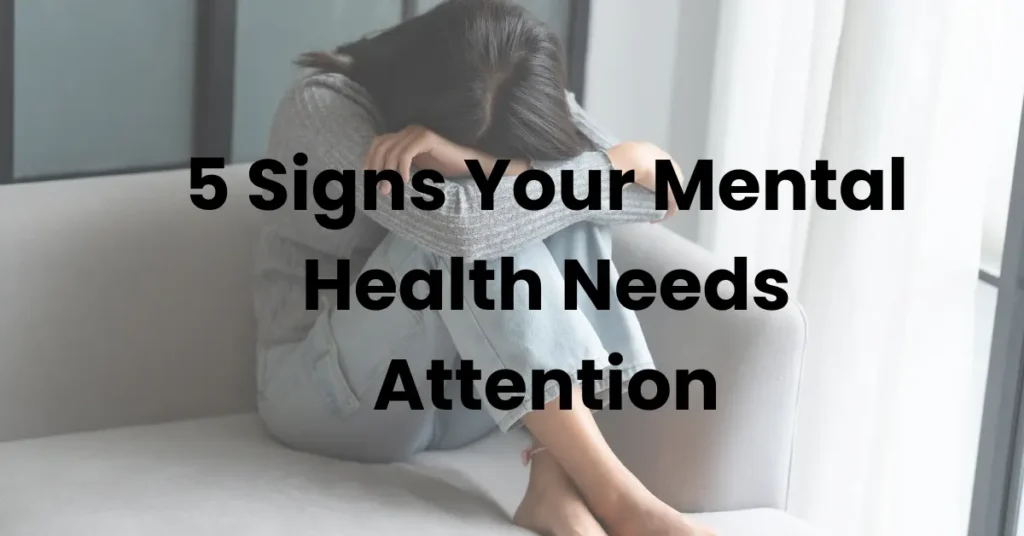
The truth is, your mind sends out signals just like your body does. And learning to recognize those signals before they get louder can genuinely change your life. Here are 5 signs your mental health is asking for a little more attention
1. You’re Exhausted No Matter How Much You Sleep
There’s tired, and then there’s bone-deep, no-amount-of-rest-fixes-it tired.
If you’re waking up after 8 hours and still feeling completely drained, that’s worth paying attention to. Mental and emotional exhaustion doesn’t vanish with sleep the way physical tiredness does. It tends to linger, quietly draining your energy, your motivation, and your joy.
This kind of fatigue is often one of the earliest signs of burnout, depression, or chronic anxiety and it’s easy to dismiss because, well, “I’m probably just not sleeping well enough.”
What to watch for: Persistent low energy, losing interest in things you used to enjoy, or feeling like even small tasks take enormous effort.
2. Your Emotions Feel Out of Control or Completely Numb
Mental health issues don’t always look like sadness. Sometimes they look like snapping at someone you love over something tiny. Sometimes they look like feeling absolutely nothing at all.
If your emotional responses feel disproportionate crying unexpectedly, getting irritated very easily, or swinging between intense feelings your nervous system might be under real strain. On the flip side, emotional numbness (feeling disconnected, hollow, or like you’re watching your own life from the outside) is equally important to notice.
Both extremes are your mind’s way of signaling overload.
What to watch for: Mood swings that feel out of character, emotional outbursts you can’t explain, or a general flatness that’s settled in over time.
3. You’ve Started Pulling Away From People
When we’re not okay, one of the most natural (and counterproductive) things we do is withdraw. We cancel plans. We stop replying to messages. We tell ourselves we just “need some alone time” and while that’s sometimes healthy, it becomes a red flag when it turns into a pattern.
Social withdrawal is one of the most common signs of depression and anxiety. The cruel irony is that the connection we’re avoiding is often exactly what we need.
If you’ve noticed yourself consistently avoiding friends, family, or activities that used to feel good and it’s been going on for more than a couple of weeks that’s your mental health asking for support.
What to watch for: Turning down social invitations more than usual, feeling like a burden to others, or preferring isolation over connection on most days.
4. You’re Using Coping Mechanisms to Get Through the Day
We all have ways of unwinding a glass of wine after work, some late-night scrolling, a bit of comfort food when things get hard. That’s human, and mostly fine in moderation.
But when those habits start becoming necessary when you can’t get through the day without them, when you’re using them to avoid feeling something that’s a shift worth noticing.
This applies to alcohol, food, shopping, overworking, excessive exercise, substances, or even just compulsively staying busy so you never have to sit with your thoughts. If you find yourself regularly numbing out rather than coping, your mental health might be struggling more than you realize.
What to watch for: Increased reliance on substances or distractions, difficulty sitting with your own thoughts, or a sense that you’re always “managing” rather than actually feeling better.
5. Your Physical Body Is Feeling It Too
Mental and physical health are far more connected than we give them credit for.
Unexplained headaches, a tight chest, stomachaches with no clear cause, a jaw that’s constantly clenched, or a body that just feels tense all the time these can all be physical manifestations of emotional stress and anxiety.
The mind-body connection is real. When our mental health suffers, our bodies often carry the load. If you’ve been to a doctor, ruled out physical causes, and still feel unwell it might be time to look inward.
What to watch for: Recurring physical symptoms without a medical cause, disrupted sleep or appetite, or a general sense of physical tension you can’t shake.
So, What Do You Do Next?
First recognize that noticing these signs is already an act of self-awareness. That matters.
Here’s what can genuinely help:
- Talk to someone you trust. Not to solve anything just to be heard.
- Speak to a professional. A therapist or counselor isn’t a last resort; they’re a resource.
- Start small. Even a 10-minute walk, a proper meal, or a good night’s sleep is a step.
- Be honest with yourself. The “I’m fine” habit is deeply human, but it has limits.
You don’t have to be in crisis for your mental health to deserve attention. The earlier you notice and respond to these signs, the gentler the path forward tends to be.
You matter. Your mind matters. And it’s okay to take this seriously.
If you or someone you know is struggling, please reach out to a mental health professional or a trusted person in your life. You don’t have to go through this alone.