What Is TMS Therapy and How Does It Actually Work in the Brain?
TMS Therapy (Transcranial Magnetic Stimulation) is a non-invasive mental health treatment that uses targeted magnetic pulses to stimulate nerve cells in areas of the brain involved in mood regulation. It is most commonly used for people with depression who have not experienced sufficient improvement from medication or psychotherapy. By activating underactive brain circuits and encouraging healthier communication between brain networks, TMS Therapy may help improve mood, motivation, and emotional well-being.
If you have been exploring alternative depression treatment options, you may wonder how magnetic pulses can influence the brain. The answer lies in the ability of TMS Therapy to stimulate specific nerve cells, strengthen brain connections, and support healthier patterns of brain activity. Understanding how this treatment works can help you make informed decisions about your mental health care.
What Is TMS Therapy and Why Is It Used for Depression Treatment?
Transcranial Magnetic Stimulation (TMS) Therapy is an FDA-approved treatment that uses magnetic fields to stimulate targeted areas of the brain, as explained by Mayo Clinic (TMS Therapy Overview). Unlike medication, which affects the entire body, TMS Therapy focuses on specific brain regions linked to mood, emotional regulation, and cognitive function.
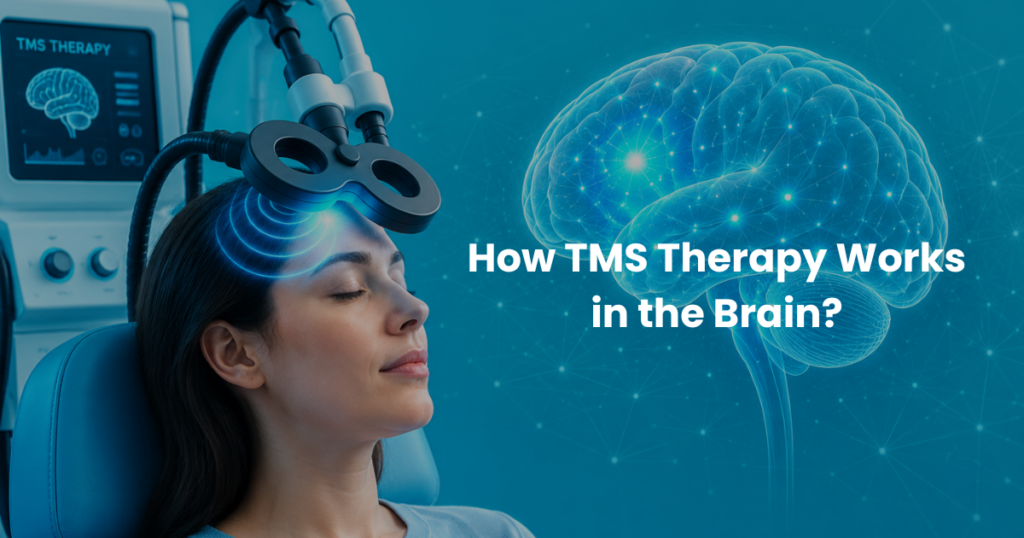
The treatment is non-invasive, meaning it does not require surgery, anesthesia, or implanted devices. A specialized magnetic coil is placed against the scalp, where it delivers carefully controlled magnetic pulses to targeted brain areas.
Psychiatrists often recommend TMS Therapy for individuals with Major Depressive Disorder who have not found adequate relief through traditional treatments. It is also used in certain cases of Obsessive-Compulsive Disorder (OCD) and continues to be studied for additional mental health conditions.
One of the reasons TMS Therapy has gained attention is that it directly targets brain activity associated with depression rather than relying solely on medication-based approaches.
How Does Brain Function Change in Depression and Other Mental Health Conditions?
The brain controls emotions, motivation, concentration, memory, and decision-making through a network of interconnected regions that constantly communicate with one another. When these communication pathways function properly, individuals are better able to manage emotions, cope with stress, and maintain healthy daily functioning.
In people with depression, some of these networks may become less active or less connected. Research has shown that the left dorsolateral prefrontal cortex (DLPFC), an area involved in mood regulation and decision-making, often shows reduced activity in individuals experiencing depression.
When communication within these brain networks becomes disrupted, symptoms may develop, including:
Persistent sadness

Low motivation

Difficulty concentrating

Reduced energy levels

Loss of interest in activities

Feelings of hopelessness

Understanding these changes has helped researchers develop treatments like TMS Therapy that focus on improving brain activity and restoring healthier neural communication.
How Does TMS Therapy Actually Work in the Brain?
The effectiveness of TMS Therapy comes from its ability to stimulate targeted brain regions and encourage healthier neural activity. Rather than affecting the entire nervous system, the treatment focuses on specific circuits involved in emotional regulation and mood control.
1. TMS Therapy Targets Underactive Brain Regions
Many individuals with depression experience reduced activity in the left dorsolateral prefrontal cortex (DLPFC). This region plays a major role in emotional processing, motivation, attention, and decision-making. When this area becomes underactive, symptoms such as low mood, fatigue, lack of motivation, and difficulty focusing may become more noticeable. TMS Therapy is designed to stimulate this area and encourage healthier patterns of brain activity.
2. TMS Therapy Uses Magnetic Pulses to Activate Nerve Cells
During treatment, a magnetic coil is positioned against the scalp. The coil generates focused magnetic pulses that pass safely through the hair, scalp, and skull. Once these magnetic pulses reach the brain, they create tiny electrical currents within targeted nerve cells. These electrical signals stimulate neurons and encourage them to communicate more effectively with surrounding brain networks. A simple way to understand this process is to imagine turning the power back on in a room where the lights have become dim. TMS Therapy helps activate brain circuits that may not be functioning at their optimal level.
3. TMS Therapy Influences Emotional Regulation Networks
Although the magnetic pulses only reach a few centimetres into the brain, their effects extend beyond the treatment area. The stimulated brain regions communicate with deeper structures involved in emotional regulation, including parts of the limbic system. These networks influence mood, stress responses, emotional reactions, and overall psychological well-being. As communication between these areas improves, many individuals experience positive changes in mood and emotional functioning.
4. TMS Therapy Supports Neuroplasticity and Brain Rewiring
One of the most important concepts behind TMS Therapy is neuroplasticity. Neuroplasticity refers to the brain’s ability to adapt, reorganise, and create new neural connections throughout life. This process allows the brain to learn, recover, and develop healthier communication pathways. Repeated stimulation over multiple treatment sessions encourages the brain to strengthen neural circuits involved in mood regulation and emotional resilience.
Over time, TMS Therapy may help:
• Increase activity in targeted brain regions
• Strengthen healthy neural pathways
• Improve communication between brain networks
• Support emotional regulation
• Promote long-term symptom improvement
This process helps the brain move away from patterns associated with depression and toward healthier patterns of activity.
5. TMS Therapy Can Help Balance Brain Activity
Depending on the treatment protocol, TMS Therapy can either increase activity in underactive brain regions or reduce activity in overactive brain circuits. This ability to help balance neural activity is one reason TMS continues to be explored as a treatment option for various mental health conditions.
What Happens During a TMS Therapy Session?
Many people considering TMS Therapy want to know what the treatment actually feels like. The process begins with a psychiatric evaluation to determine whether the treatment is appropriate for the individual’s needs. Once approved, treatment sessions are scheduled over several weeks.
During a typical session:
• You sit comfortably in a treatment chair
• A magnetic coil is positioned against your scalp
• Earplugs or headphones are provided because the machine produces clicking sounds
• Magnetic pulses are delivered to targeted brain regions
• You may feel a gentle tapping sensation on your scalp
Most sessions last between 3 and 40 minutes, depending on the treatment protocol being used. Because TMS Therapy does not require anaesthesia or sedation, patients remain fully awake and alert. After treatment, most individuals can immediately return to work, school, driving, or other daily activities.
Who May Benefit From TMS Therapy for Depression and Other Mental Health Conditions?
TMS Therapy may be beneficial for individuals who have not achieved adequate symptom relief through traditional treatment approaches.
Potential candidates often include people with:
• Major Depressive Disorder
• Treatment-Resistant Depression
• Obsessive-Compulsive Disorder (OCD)
• Difficulty tolerating antidepressant side effects
• Interest in non-invasive treatment options
A psychiatrist will carefully evaluate each individual’s symptoms, treatment history, and overall health before determining whether TMS Therapy is appropriate.
What Are the Benefits of TMS Therapy?
TMS Therapy continues to gain attention because it offers several advantages compared to some traditional treatment approaches.
Potential benefits include:
• Non-invasive treatment
• No surgery required
• No anaesthesia or sedation
• No recovery downtime
• Targeted brain stimulation
• Ability to continue normal daily activities
• Can be combined with medication and therapy
• Generally well tolerated
• Does not typically affect memory or thinking abilities
These advantages make TMS Therapy an appealing option for many individuals seeking additional support for depression treatment.
Conclusion: Understanding How TMS Therapy Supports Mental Health Recovery
TMS Therapy is changing the way mental health professionals approach depression treatment. By stimulating underactive brain regions, activating targeted nerve cells, improving communication between mood-regulation networks, and supporting neuroplasticity, TMS Therapy helps encourage healthier brain activity.
For individuals who have not found sufficient relief through traditional treatment options, this innovative approach may provide another path toward recovery. Speaking with a qualified psychiatrist can help determine whether TMS Therapy is the right fit for your individual mental health needs.
If depression symptoms continue to affect your quality of life, professional guidance is important. You can also directly explore treatment options and book a consultation with a specialist at ICT Psychiatry Appointment to learn whether TMS Therapy may be part of your personalised treatment plan.